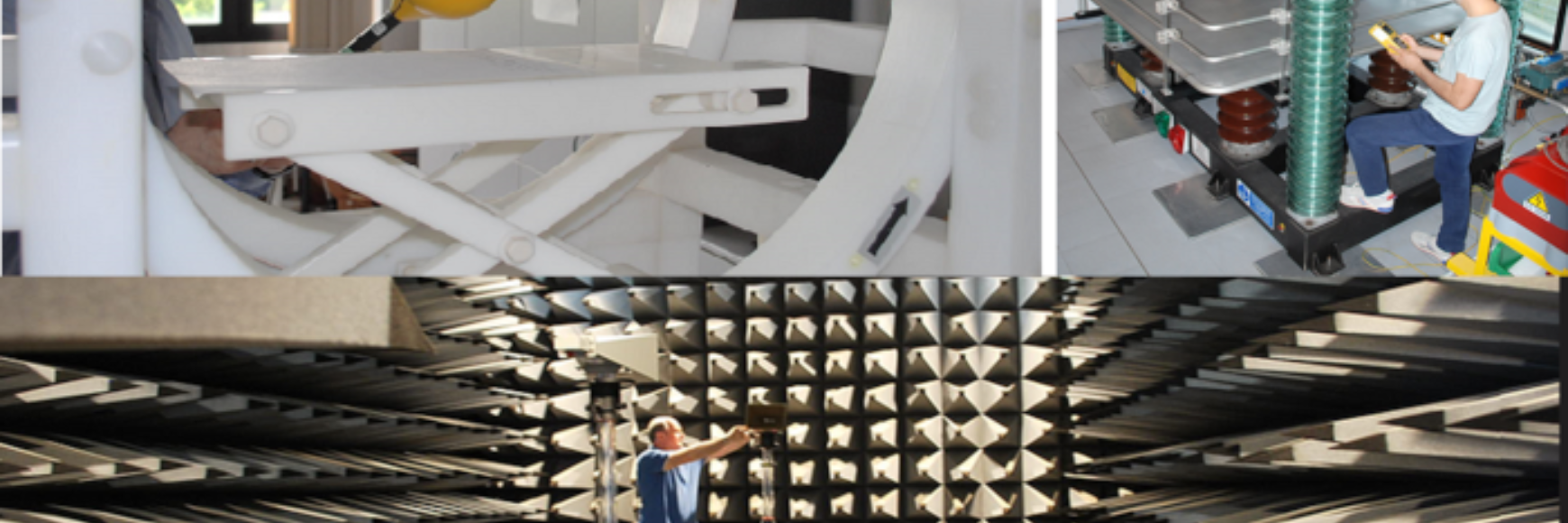
The laboratory performs calibration of electric, magnetic, and electromagnetic field meters used to estimate human exposure and to assess the levels of electric and magnetic fields generated by systems for the transmission, distribution, and use of electrical energy.
The dissemination of low-frequency electric field and magnetic flux density quantities is ensured by INRIM reference generation systems, through which the calibration of measuring instruments is performed. These instruments are used to estimate human exposure and to evaluate the levels of electric, magnetic, and electromagnetic fields generated by systems for the transmission, distribution, and use of electrical energy.
The Calibration and Measurement Capabilities (CMCs) published on the BIPM KCDB website and validated through international measurement comparisons within EURAMET, include:
- reference magnetic flux density generation systems (Helmholtz coils) for the calibration of magnetic flux density sensors from 5 Hz to 400 kHz, with amplitudes ranging from 0.1 μT to 3 mT (25 μT at 100 kHz and 3 μT at 400 kHz);
- a reference electric field generation system for field strengths up to 40 kV/m at industrial frequency and up to 500 V/m from 10 Hz to 2 kHz;
- calibration systems by comparison with a reference measuring instrument for magnetic field generators (Helmholtz coils), and for determining the coil constant (generated magnetic flux density per unit current) from 5 Hz to 100 kHz;
- reference radiofrequency electromagnetic field generation systems, based on a TEM cell and an anechoic chamber. These systems allow the calibration of electromagnetic field meters from 1 V/m to 60 V/m over the frequency range from 100 kHz to 500 MHz, and up to 18 GHz in an anechoic chamber.